

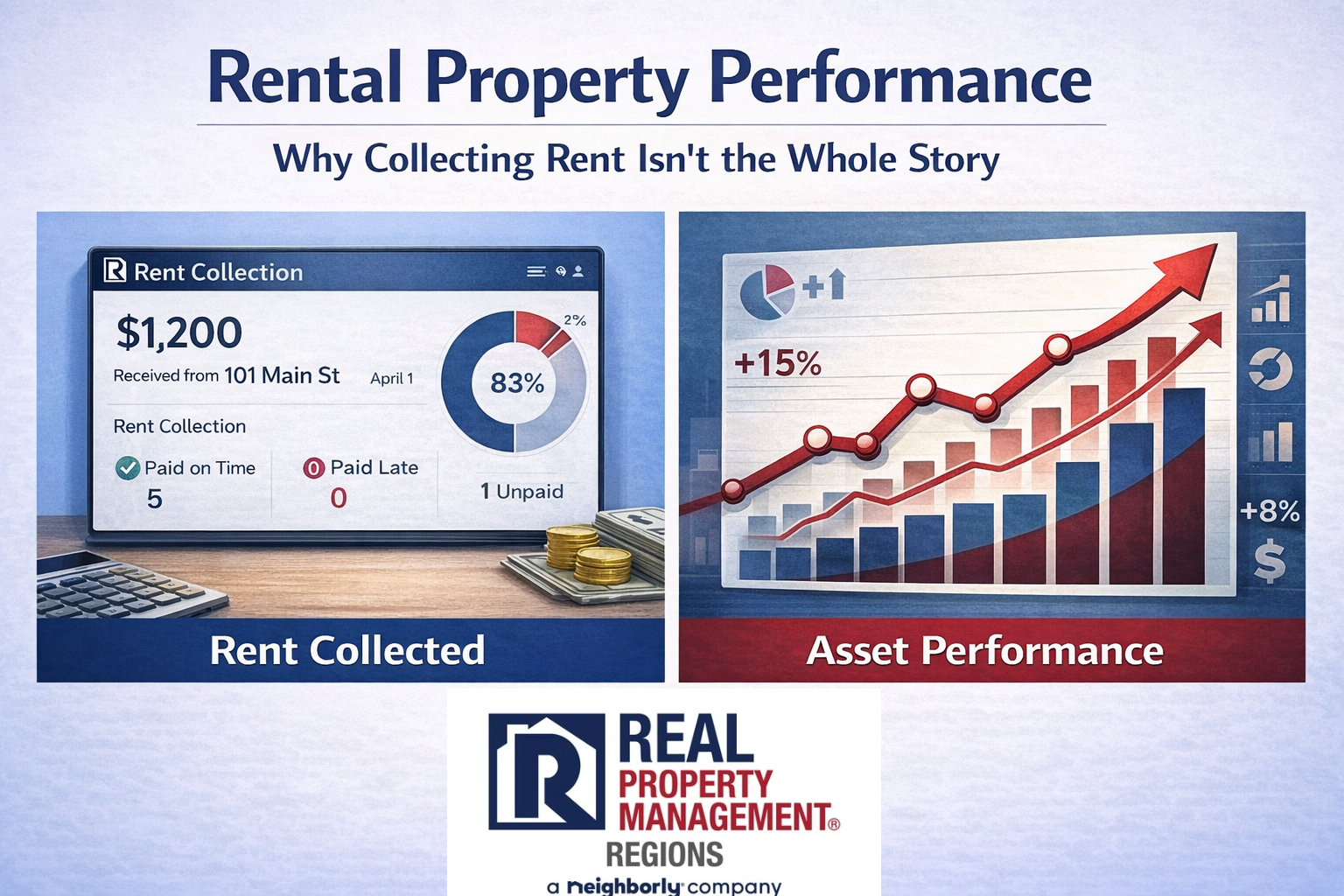
Collecting rent is only part of the story. Strong rental property owners measure the full performance of their real estate asset over time.
Most rental property owners ask a simple question each month:
Did the rent come in?
For a lot of landlords, that’s the entire scoreboard.
If the answer is yes, it’s easy to assume the property is doing well.
But the owners who quietly build long-term wealth through real estate understand something different. Rent collection is only one piece of the picture.
A rental property is not just a source of monthly income.
It is a performing asset.
And the strongest owners start looking at the property differently. They start asking how the asset is really performing over time.
Watch Today’s Ruperto’s First Cup
Spring Rental Market Strategy: Why Pricing Discipline Beats Vacancy | Ruperto’s First Cup
This article expands on today’s Ruperto’s First Cup conversation about rental property pricing strategy and long-term asset performance.
In today’s Ruperto’s First Cup, we discuss a common mistake many rental property owners make during the spring leasing season: sacrificing long-term asset performance because of short-term vacancy anxiety.
Pricing discipline matters because real estate wealth is not built by reacting emotionally to vacancy. It is built by managing the asset strategically.
This leads to a bigger question:
How should owners evaluate the true performance of their rental property?
The Rent Check Is Only the Surface
Monthly rent matters. Cash flow matters.
But rent alone does not tell you whether a rental property is truly performing.
A stronger evaluation considers the forces that work together behind the scenes in real estate investing:
- Cash flow — the income the property generates today
- Appreciation — the long-term growth of the property’s value
- Amortization — the gradual reduction of the loan balance over time
- Depreciation — the tax advantages available to rental property owners
For example, the IRS allows residential rental properties to be depreciated over 27.5 years, creating meaningful tax advantages for investors. Owners can review the official guidance in
IRS Publication 527: Residential Rental Property.
These forces often work quietly in the background. When they align, a property can generate far more long-term value than the rent check alone might suggest.
Yet many owners never step back to see the full picture.
They track rent.
Maybe expenses.
Occasionally market value.
But rarely do they evaluate how the entire asset is performing over time.
Strong Owners Think Like Asset Managers
When an owner begins thinking about rental property performance instead of simply rent collection, decision-making becomes more strategic.
Pricing decisions are no longer driven purely by vacancy pressure.
Maintenance decisions shift from reactive repairs to proactive asset protection.
Leasing timelines become part of a broader income strategy rather than isolated operational events.
This mindset shift is subtle but powerful.
Average owners focus on occupancy.
Stronger owners focus on asset performance.
Visibility Changes the Quality of Decisions
One reason many owners struggle to evaluate performance is simple: visibility.
Real estate investments contain multiple moving parts. Without a system that shows how those pieces interact, it becomes difficult to see the full picture.
That is why experienced investors rely on better frameworks and better data.
When owners can see how cash flow, loan paydown, appreciation potential, and tax advantages interact, decision-making becomes calmer and more disciplined.
Real estate wealth usually isn’t built through dramatic moves.
It’s built through clear thinking and consistent decisions over time.
Why Rental Properties Sometimes Underperform
A property can collect rent and still underperform.
It can stay occupied while missing opportunities.
It can look stable month to month while quietly weakening over time because of:
- deferred maintenance
- poor pricing discipline
- inconsistent leasing strategy
- lack of performance visibility
That is why sophisticated owners evaluate more than rent collection and occupancy.
They manage their property as an asset that requires measurement, protection, and long-term strategy.
A Better Way to Evaluate Rental Property Performance
At Real Property Management Regions, we developed the Wealth Optimizer to help owners see their property more clearly.
Instead of focusing only on monthly rent, the Wealth Optimizer helps evaluate performance across the drivers that shape long-term real estate results.
It helps owners understand how their asset is performing and where opportunities may exist to strengthen results over time.
Because the properties that build lasting wealth are rarely the ones that simply collect rent.
They are the ones that are measured, managed, and optimized as long-term assets.
Start With Better Visibility
If you already work within the RPM Regions ecosystem, explore the Wealth Optimizer here:
If you are evaluating your investment property more strategically for the first time, start here:
Sometimes the next breakthrough in real estate investing is not buying another property.
Sometimes it is finally seeing the one you already own clearly.
Further Reading for Rental Property Owners
- IRS Publication 527 — Residential Rental Property Rules
- IRS Publication 946 — Depreciation Explained
- Consumer Financial Protection Bureau — Mortgage Amortization
Protect your asset. Build your legacy. Level up.
This content is provided for general informational and educational purposes only and does not constitute financial, legal, tax, or investment advice. Readers should consult with licensed professionals regarding their specific circumstances.
We are pledged to the letter and spirit of U.S. policy for the achievement of equal housing opportunity throughout the Nation. See Equal Housing Opportunity Statement for more information.
