

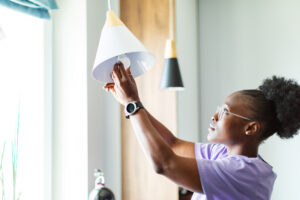
 Lighting issues are some of the most common (and fixable) maintenance issues residents face. Knowing how and when to handle rental light bulb replacement or a fuse is an important part of a tenant’s basic maintenance. With a little knowledge, residents can solve small lighting problems quickly, prevent avoidable maintenance requests, and make it easier to keep their apartment safe and comfortable.
Who Is Responsible for Light Bulbs and Fuses in a Rental?
In many rental homes, it’s the renter who is responsible for everyday lighting maintenance. For example, residents are usually responsible for replacing standard light bulbs and addressing simple fuse or breaker issues.
Landlords, on the other hand, are typically responsible for handling major electrical repairs or other issues. The expectations and responsibilities related to light bulbs and fuses are often described in your lease, so be sure to review your lease documents closely.
Understanding the Types of Light Bulbs in Your Apartment
Rental homes and apartments may use a mix of multiple bulb types. Knowing which light bulbs are right for each fixture is key for correct replacement and maintenance. For example, common bulb types include LED, incandescent, CFL, and different specialty bulbs for appliances or outdoor fixtures. When preparing to change a light bulb, be sure to check:
- Bulb size and shape, including the base (some bulbs are narrower at the base than others)
- Wattage or watt-equivalent
- Fixture labeling
Using the correct bulb matters because it ensures you are not overheating or damaging the fixtures in your home.
How to Safely Replace a Light Bulb
Once you have determined the right light bulb type, your next step is to prepare to safely replace it. As with any rental home maintenance task, safety always comes first. To safely replace a light bulb, be sure to:
- Turn off the light and let the bulb cool
- Use a stable step stool or ladder for higher fixtures
- Twist slowly near the base to remove the bulb (be careful not to force it!)
- Twist the new bulb into place, being careful not to use too much pressure or to overtighten it
If a bulb breaks in the socket or won’t come out easily, stop! Contact your landlord and ask for assistance. Removing a broken bulb, even when the light is turned off, is risky, so be sure to protect yourself first.
What Tenants Should Know About Fuses and Circuit Breakers
The electrical system in your rental home is based on an electrical panel located either in a basement, garage, closet, or occasionally on the home’s exterior. Some older rentals still use fuses, while newer ones rely on circuit breaker panels. A blown fuse or tripped breaker often causes lights or outlets to stop working.
Resetting a breaker or replacing a fuse is typically safe and may be considered renter’s basic maintenance, but only if your lease documents cover it. To replace a fuse or a breaker, you will need to follow steps similar to that of changing a light bulb: determine what type of fuse or breaker you need, remove the old one, and install the new. There are many different kinds of fuses and circuit breakers, so if you plan to replace it yourself be sure to research the right type.
If you don’t feel comfortable replacing your own fuses or circuit breakers, contact your landlord for help. This is also true if you are experiencing any of the following signs of bigger issues, including:
- Regular breaker trips
- Flickering lights across multiple rooms
- Burning smells or buzzing sounds
Clues like these can indicate more serious electrical issues that require professional service.
Simple Habits That Prevent Bigger Problems
When it comes to lighting maintenance, a little prevention goes a long way. You can do a lot to stay on top of basic home maintenance, including light bulb and circuit breaker replacement, by creating these simple habits:
- Make it easier to keep spare bulbs on hand for lights you use frequently, and change burnt out bulbs right away. Burnt-out or missing bulbs are a very common reason tenants see deductions on their security deposit during move-out!
- Take care not to overload outlets or power strips, and use a surge protector for sensitive electronic equipment.
- Report recurring lighting issues as soon as they happen, and always focus on your personal safety first.
Following habits like these can help keep you and your rental safe and brightly lit.
Small Skills, Big Confidence
Learning how to handle light bulb replacement and basic fuse or breaker issues can help you feel more empowered in your home maintenance responsibilities. These and other small tasks are an key part of responsible renting.
If you have questions about tenant responsibilities and basic maintenance responsibilities, contact your local experts at Real Property Management Regions. Our team is happy to help clarify lease terms or help you find a rental home where maintenance is handled proactively and professionally.
This content is provided for general informational and educational purposes only and does not constitute financial, legal, tax, or investment advice. Readers should consult with licensed professionals regarding their specific circumstances.
We are pledged to the letter and spirit of U.S. policy for the achievement of equal housing opportunity throughout the Nation. See Equal Housing Opportunity Statement for more information.
