

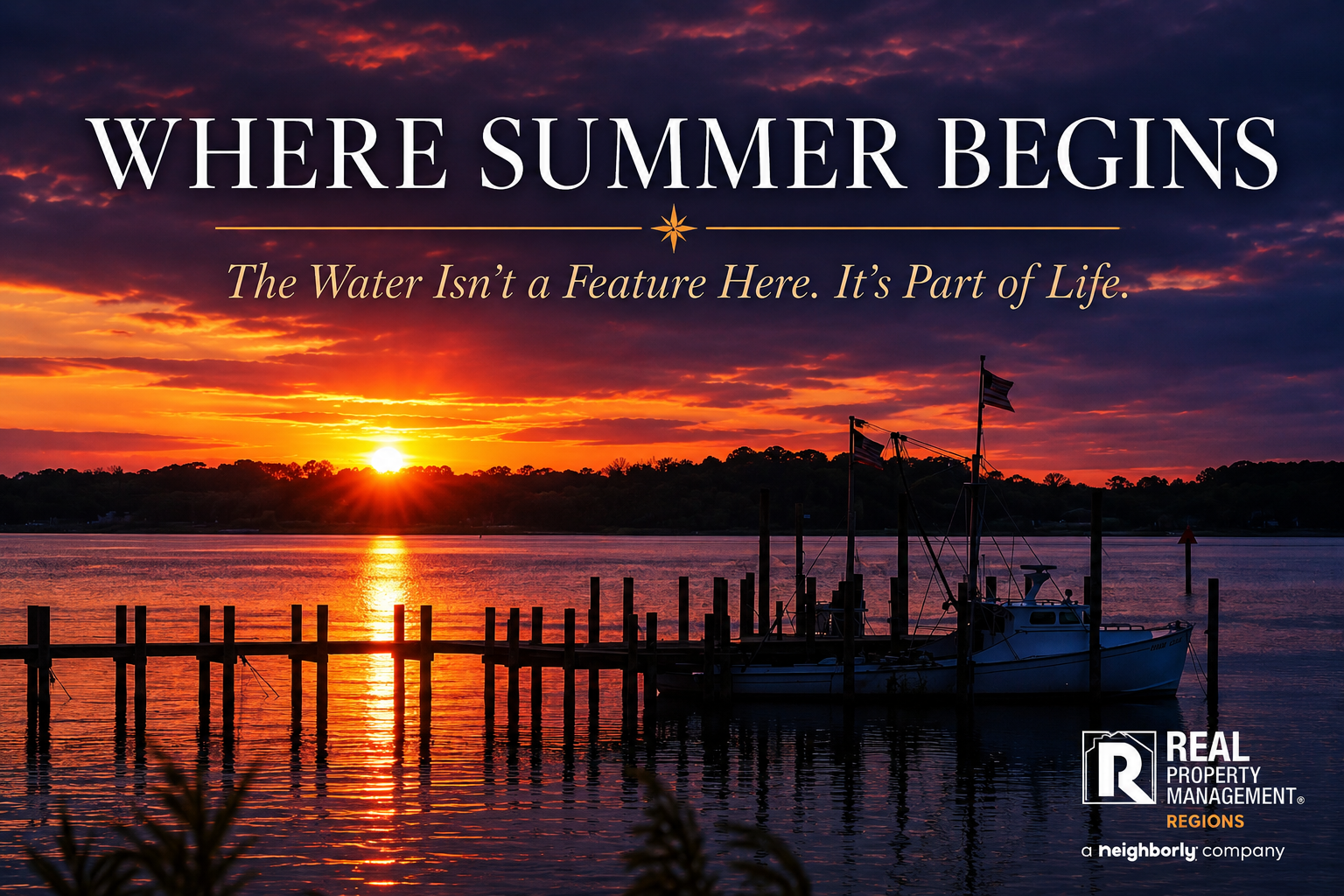
 Every Friday, we step away from real estate strategy for a few minutes to talk about the people, places, traditions, and local rhythms that make our region special.
There are plenty of ways to tell summer has arrived.
The calendar has a date for it. Schools eventually let out. The forecast starts showing more warm afternoons than cool mornings. Garden centers get busier, ice cream starts sounding like a reasonable dinner option, and porches across the region begin filling up again in the evening.
But around the Virginia Northern Neck and Virginia Middle Peninsula, summer usually announces itself in a different way.
Life starts moving back toward the water.
You see it first in the small things. Trucks towing boats before sunrise. Coolers getting loaded before most people have poured their first cup of coffee. Fishing rods leaned against tailgates. Families checking the weather one more time before heading out. At public ramps, marinas, docks, and waterfront roads, the season begins to show itself long before the official calendar catches up. Many of these public access locations are maintained through the efforts of the Virginia Department of Wildlife Resources, helping residents and visitors connect with the waterways that define this region.
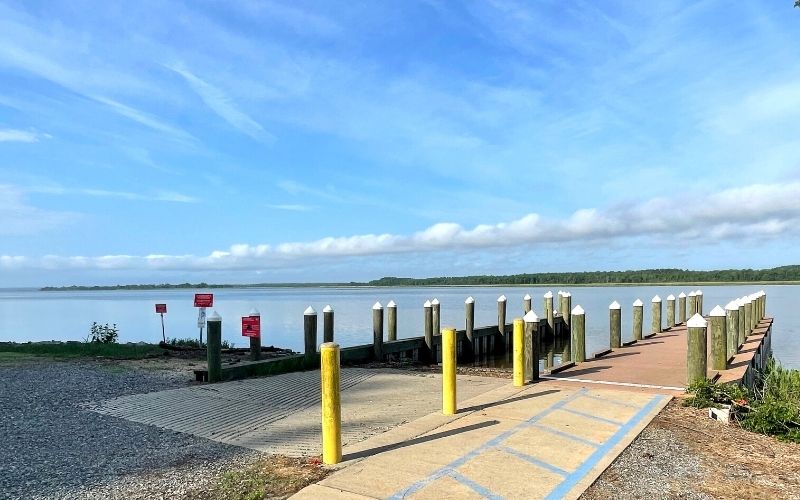 A quiet morning at the boat ramp. Around here, summer often begins before sunrise.
Where the Weekend Starts
A boat ramp is not much to look at on paper. Concrete, pilings, water, parking spaces, and a dock. Functional. Practical. Easy to overlook.
Yet on a summer morning, it can tell you almost everything about a community.
Spend enough time at a boat ramp and you’ll eventually see a little bit of everything. There is usually someone launching a boat like they have been doing it their entire life. There is also usually someone attempting it for the very first time.
Somewhere this summer, a teenager will be getting their first lesson in backing a trailer. Somebody will forget to put the drain plug in. Somebody will back down perfectly on the first try and act like it was no big deal. Somebody else will need three attempts and an audience they did not ask for.
The funny thing is that nobody remembers the perfect launch.
They remember the stories.
And around here, boat ramps seem to generate plenty of them.
You’ll see kids carrying snacks, grandparents checking gear, neighbors picking up conversations that probably started last summer and never really ended, and somebody standing off to the side offering advice whether anyone asked for it or not.
Some people are heading out to fish. Some are going crabbing. Some are just trying to spend a few hours on the water before the heat settles in. Everybody arrives for a different reason, but for a few minutes, they all start in the same place.
Around here, people don’t always ask if you’re going to the water this weekend.
They ask where.
The Water Isn’t Just Scenery
That is one of the things that makes life across the Virginia Northern Neck and Virginia Middle Peninsula different. The water is not simply something we look at from a distance. It shapes how people spend their time, how families build traditions, how businesses operate, and how communities understand themselves.
Long before waterfront living became a phrase in a listing description, these rivers, creeks, and bays were working places. They carried people, food, goods, stories, and livelihoods. The Potomac, Rappahannock, York, Piankatank, and Chesapeake Bay have shaped this region for generations.
You can still feel that history today.
Not just at museums or historic sites, but on ordinary summer mornings when someone checks crab pots, loads bait, or heads out before sunrise because the water has always been part of the rhythm of life here.
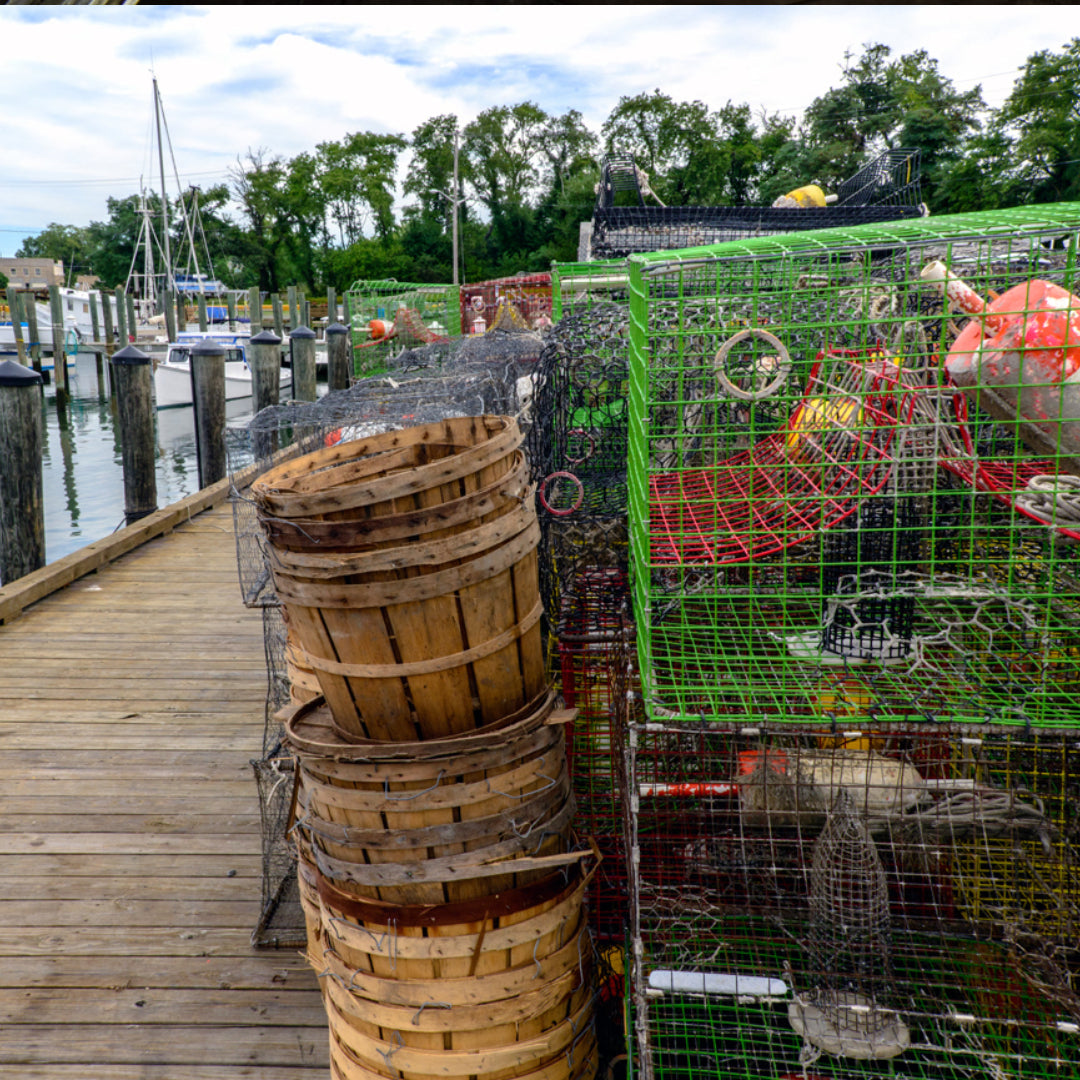 Crabbing isn’t just recreation in our region. It’s part of a tradition that stretches back generations.
Crabbing, Fishing, and the Stories That Come With Them
Spend enough time near the water in summer and you quickly learn that not everyone is chasing the same thing.
Some are after fish. Some are after crabs. Some are after a quiet morning. Some are trying to teach a child the same thing someone once taught them. How to bait a line. How to check a crab pot. How to read the sky. How to know when it is time to head back in.
Most of us do not realize we are watching traditions get passed along until years later.
In many places, crabbing is something people do on vacation. Around here, it is part of the living culture. It belongs to backyard docks, family cookouts, working waterfronts, and summer stories that begin with, “You should have seen what happened out there.”
Of course, not every trip goes according to plan. Boats refuse to start. The cooler is lighter than expected. The weather changes its mind. Somebody forgets the sunscreen, the bait, or the one thing they were specifically asked not to forget.
Those stories become part of the tradition too.
Years later, they are often remembered more clearly than the perfect days.
The People Who Worked the Water
Any honest story about summer on the water here has to make room for the watermen.
Long before weekend boaters, second homes, and sunset photos, generations of watermen worked these rivers and creeks because that was how families made a living. Their work helped shape towns, businesses, restaurants, docks, and local identity across the Northern Neck and Middle Peninsula.
That influence is still here.
You see it in the crab pots stacked along docks. You see it in oyster boats, seafood markets, marina conversations, and the quiet pride people have in knowing where their food came from. You see it in communities that understand the water as both beautiful and demanding.
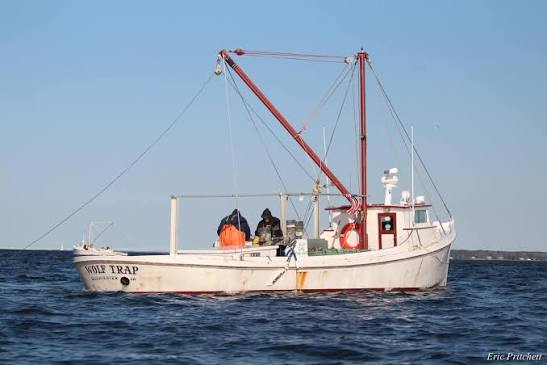 Long before tourism brochures and social media posts, working watermen helped shape life along these rivers and creeks. Photo by Eric Pritchett.
That is why the water deserves more than a pretty caption.
Anyone who has spent enough time here knows the water gives as much trouble as it gives beauty. It has carried work, memory, hardship, tradition, and more than a few stories that improve every time somebody retells them.
Sunrises, Sunsets, and Why People Keep Coming Back
Everyone has their favorite stretch of water.
Some people swear there is nothing better than a sunrise over the Chesapeake Bay. Others prefer an early morning on the Rappahannock before the first boat breaks the reflection. Some people love the quiet of a creek, the open feel of the Potomac, or the familiar view from a dock they have visited for years.
For me, it is hard to beat a sunset on Monroe Bay.
The fishing may be slow. The cooler may not be as full as you hoped. The day may not have gone exactly as planned. But when the sky starts turning shades of orange, pink, and gold over the water, you remember that some of the best moments out here have nothing to do with what is in the boat.
You may come for the fishing. You may come for the crabbing. You may come for the boating.
Eventually, you find yourself coming back for the sunrise, the sunset, and the feeling that life slows down for a little while.
Why Summer Feels Different Here
In many places, summer is something people leave town to find.
Across the Virginia Northern Neck and Virginia Middle Peninsula, summer often feels like something already waiting for you. It is in the boat ramps, the crab pots, the marinas, the waterfront roads, the porches, the seafood, the sunsets, and the conversations that happen when people gather near the water.
That does not mean life here is perfect. No place is. But there is something deeply meaningful about living in a region where the natural landscape still shapes daily life.
That is why the water is not just a feature here.
It is part of life.
And when summer begins, that becomes easier to see.
For more local observations, regional trends, and owner-focused articles about the Virginia Northern Neck, Virginia Middle Peninsula, and Caroline County, visit our Market Insights Hub.
Whether you’re a longtime resident, a military family discovering the area for the first time, or an investor evaluating opportunities in the region, understanding the communities that drive demand matters. If you’re curious about your property’s rental potential, request a Free Rental Analysis.
Photo Credits: Boat ramp and crab pot photographs courtesy of the Virginia Department of Wildlife Resources (DWR). Waterman vessel photograph by Eric Pritchett. Monroe Bay sunset photograph from the Real Property Management Regions image library.
Protect your asset. Build your legacy. Level up.
This content is provided for general informational and educational purposes only and does not constitute financial, legal, tax, or investment advice. Readers should consult with licensed professionals regarding their specific circumstances.
We are pledged to the letter and spirit of U.S. policy for the achievement of equal housing opportunity throughout the Nation. See Equal Housing Opportunity Statement for more information.
