

Editorial Series | The Calm Owner Advantage
By Stephen Guasp
The property management experience can influence resident satisfaction, lease renewals, and the long-term performance of a rental property.
Welcome back to The Calm Owner Advantage. Over the past several weeks, we have examined some of the decisions that shape the performance of a rental property, from establishing the right rent to selecting the first highly qualified applicant. Those decisions matter, but they are still only the beginning of the rental relationship.
Across the Northern Neck, Middle Peninsula, Caroline County, prospective residents generally begin their search by comparing the visible features of a home: monthly rent, location, bedrooms, flooring, appliances, yard space, and whether pets are permitted. Those details may determine which properties receive a second look, but they do not necessarily determine whether someone will have a good rental experience.
Once the lease is signed and the keys are handed over, the condition of the house is only part of what the resident is living with. The property management experience, including the communication, maintenance process, policies, technology, and judgment behind the home, becomes part of the resident’s daily life.
In other words, your tenant is renting more than the house.
The Property Management Experience Begins Before Move-In
A well-maintained home, accurate advertising, and competitive rent are essential to attracting qualified applicants. An owner should expect the property to be presented professionally. But the resident’s experience begins before anyone moves in.
Was the information about the home accurate? Were the qualification requirements clearly explained? Did every adult in the household understand that they needed to apply? Were pet and assistance-animal procedures communicated consistently? Did the applicant understand the financial requirements and what would be due before receiving the keys?
These may appear to be administrative details, but they establish expectations for the entire relationship. When the process is clear from the beginning, applicants can make informed decisions, residents know what is expected of them, and owners are less likely to encounter preventable misunderstandings later.
The same principle continues after move-in. Residents need to know how to submit a maintenance request, where to make payments, whom to contact during an emergency, and which responsibilities belong to them under the lease. The home may be what initially attracted them, but the process surrounding it becomes part of what they experience every day.
Responsiveness Does Not Mean Saying Yes to Everything
Residents naturally want quick answers when something affects their home. Owners also want to know that concerns are being handled promptly and appropriately. Responsive management, however, does not mean every repair can be completed immediately or every request must be approved.
That distinction is especially important in the communities we serve. A specialized contractor may need to travel a considerable distance to reach a property. Materials may need to be ordered. Coastal weather and heavy rain can delay exterior work. In some cases, the problem must be properly diagnosed before anyone can determine what work is actually required.
Professional management is not measured by whether every answer is yes or every repair is completed the same day. It is measured by whether the concern is acknowledged, evaluated, documented, communicated, and followed through to a reasonable conclusion.
For residents, that means knowing their request was received and understanding what happens next. For owners, it means receiving enough information to make responsible decisions without personally coordinating every phone call, contractor visit, and follow-up conversation.
Clear communication cannot eliminate every inconvenience, but it can prevent an ordinary inconvenience from becoming unnecessary frustration. A structured approach to rental-property maintenance can also help owners address problems before they become more expensive.
Consistency Protects Everyone
A strong rental experience also depends on consistency. Qualification standards should not change because an applicant has a compelling story or because an owner is anxious to fill a vacancy. Policies should not be enforced strictly with one resident and casually with another.
Application requirements, payment procedures, maintenance responsibilities, and lease terms must be documented and applied consistently. This supports the fair treatment of applicants and residents while helping owners reduce fair-housing, financial, and operational risk.
Consistency becomes particularly important when the circumstances are understandable but the requested outcome is not practical. An applicant may want a property held for several weeks before moving in, while the owner is already carrying a mortgage, utilities, insurance, and other expenses on a vacant home. A resident may disagree with a charge, while the owner believes the expense resulted from the resident’s actions. A repair may feel like an emergency to one party while the available information places it in a different maintenance category.
Good management does not ignore the human side of those situations. It listens, explains, documents, and then applies the appropriate policy.
Empathy and accountability can exist in the same conversation.
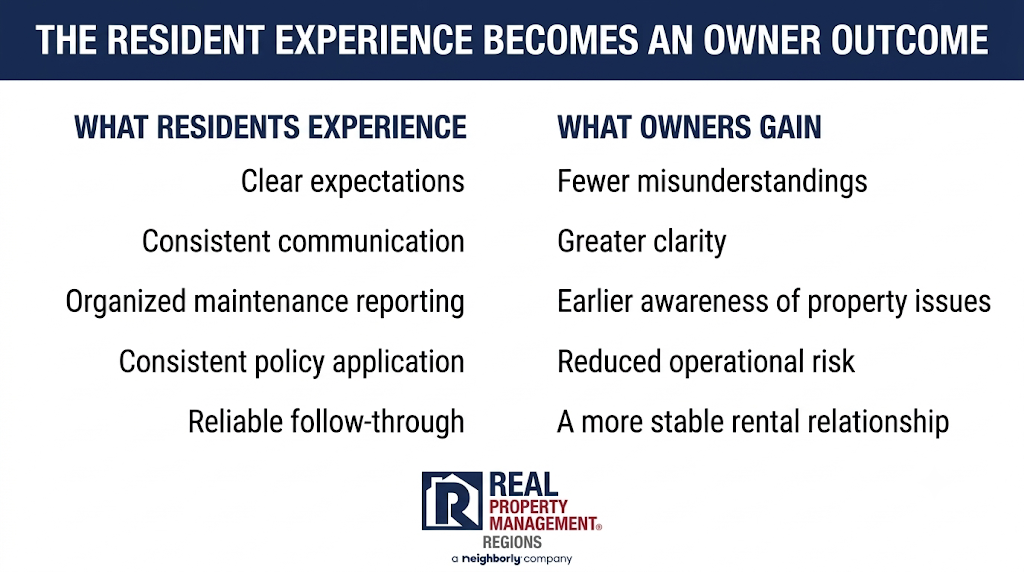
The Resident Experience Becomes an Owner Outcome
Owners sometimes view resident service as something separate from asset performance. In practice, the two are closely connected.
Residents who understand the maintenance process are more likely to report problems through the proper channel. Residents who believe their concerns will be acknowledged may be more willing to report a small leak before it becomes significant water damage. Clear expectations can reduce repeated calls, confusion over responsibilities, and disputes about what was communicated.
The property management experience can also influence whether a qualified resident chooses to renew. That does not mean an owner should approve every request to keep a resident happy. It means recognizing that respectful communication, predictable systems, and reasonable follow-through contribute to a more stable rental relationship.
Turnover carries real costs. There may be vacancy, cleaning, repairs, advertising, utility expenses, and time required to prepare the property for another resident. Retention should never come at the expense of sound standards, but avoidable turnover caused by poor communication benefits no one.
Resident experience is therefore not merely a customer-service issue. It is part of protecting the property and preserving its long-term performance.
Look Beyond the Management Fee
When owners compare property-management companies, much of the attention naturally goes to percentages and fees. Cost matters, but a management agreement is not simply a purchase of rent collection.
Owners are selecting the people and systems that will represent them when an applicant has a question, a resident reports a repair, a payment is late, a contractor is delayed, or a policy must be enforced.
Before making that decision, owners should ask:
- How are qualification requirements communicated to applicants?
- How are maintenance concerns received, prioritized, and documented?
- What communication should residents expect while work is pending?
- How are owners kept informed about expenses and larger decisions?
- Are policies applied consistently across applicants and residents?
- What happens when the answer to a resident’s request must be no?
- Who remains responsible for following the issue through to its conclusion?
Self-managing landlords should ask themselves many of the same questions. A management company is not required to create a respectful and organized rental experience. It does, however, require established systems, consistent follow-through, and enough time to manage those responsibilities well.
Renters Should Look Beyond the Property
Prospective residents benefit from conducting their own evaluation. Beyond the condition and features of the home, they should consider the company or individual behind it.
Is the application process clearly explained? Are the advertised terms accurate? Is there an established method for reporting maintenance? Are policies provided in writing? Does the communication feel organized and professional?
Good property management does not promise that every request will receive an immediate solution. It does not mean every answer will be the answer a resident hoped to receive. It means residents know where to go, what to expect, and how the matter will be handled.
The quality of a rental experience is often revealed not when everything is going well, but when something unexpected happens. Renters who value clear systems and professional communication can explore available homes managed by Real Property Management Regions.
The House Is Only Part of the Relationship
A rental property can have updated finishes, competitive rent, and a desirable location. But after move-in, the experience depends heavily on the people and systems behind it.
That is why owners should not select a property manager based only on who proposes the highest rent or charges the lowest percentage. They should also consider who will represent the property when a difficult conversation must occur, a repair takes longer than expected, or an important decision needs to be documented.
Residents should make a similar evaluation. The home matters, but so does the experience attached to it.
Whether you own a rental property or are searching for your next home, clear expectations, consistent processes, and responsive communication create a stronger rental relationship for everyone.
At Real Property Management Regions, that is part of what it means to manage a home with an asset-management mindset: protecting the property, supporting a professional resident experience, and creating the conditions for both owners and residents to move forward with confidence.
Continue the Conversation
A rental home is only one part of the relationship. Real Property Management Regions helps owners throughout Virginia’s Northern Neck, Middle Peninsula, Caroline County, King George, and surrounding communities build the communication, maintenance, leasing, and reporting systems that support stronger rental-property performance.
The Calm Owner Advantage Series
This editorial is part of an ongoing series exploring thoughtful ownership, operational excellence, and long-term real estate asset management.
- The Highest Rent Is Not Always the Best Return
- Why the First Highly Qualified Applicant Matters
- Would You Hire Yourself to Manage Your Rental Property?
About Stephen Guasp
Stephen Guasp is the co-owner of Real Property Management Regions, serving Virginia’s Northern Neck, Middle Peninsula, Caroline County, King George, and surrounding communities. Through The Calm Owner Advantage, he shares practical observations drawn from helping rental-property owners move beyond day-to-day property management and think like long-term real estate asset managers.
Protect your asset. Build your legacy. Level up.
Editorial Disclaimer
The Calm Owner Advantage is an editorial series published by Real Property Management Regions to encourage thoughtful conversations about rental-property ownership, real estate asset management, and long-term investment strategy. The information presented is intended for general educational purposes only and should not be considered legal, financial, tax, or investment advice.
Every property and ownership situation is unique. Property owners should consult qualified professionals regarding decisions specific to their circumstances.
We are pledged to the letter and spirit of U.S. policy for the achievement of equal housing opportunity throughout the nation. Review the Equal Housing Opportunity Statement for additional information.
This content is provided for general informational and educational purposes only and does not constitute financial, legal, tax, or investment advice. Readers should consult with licensed professionals regarding their specific circumstances.
We are pledged to the letter and spirit of U.S. policy for the achievement of equal housing opportunity throughout the Nation. See Equal Housing Opportunity Statement for more information.
