

By Stephen Guasp | The Calm Owner Advantage Editorial Series

The moment a resident gives notice, a countdown clock starts in most owners’ minds. Every day the property sits vacant represents rent that isn’t being collected. Naturally, the conversation usually begins with three familiar questions: How long will it take to lease? Can we raise the rent? What repairs absolutely have to be made before someone moves in? They’re practical questions because every owner wants to protect income while minimizing vacancy.
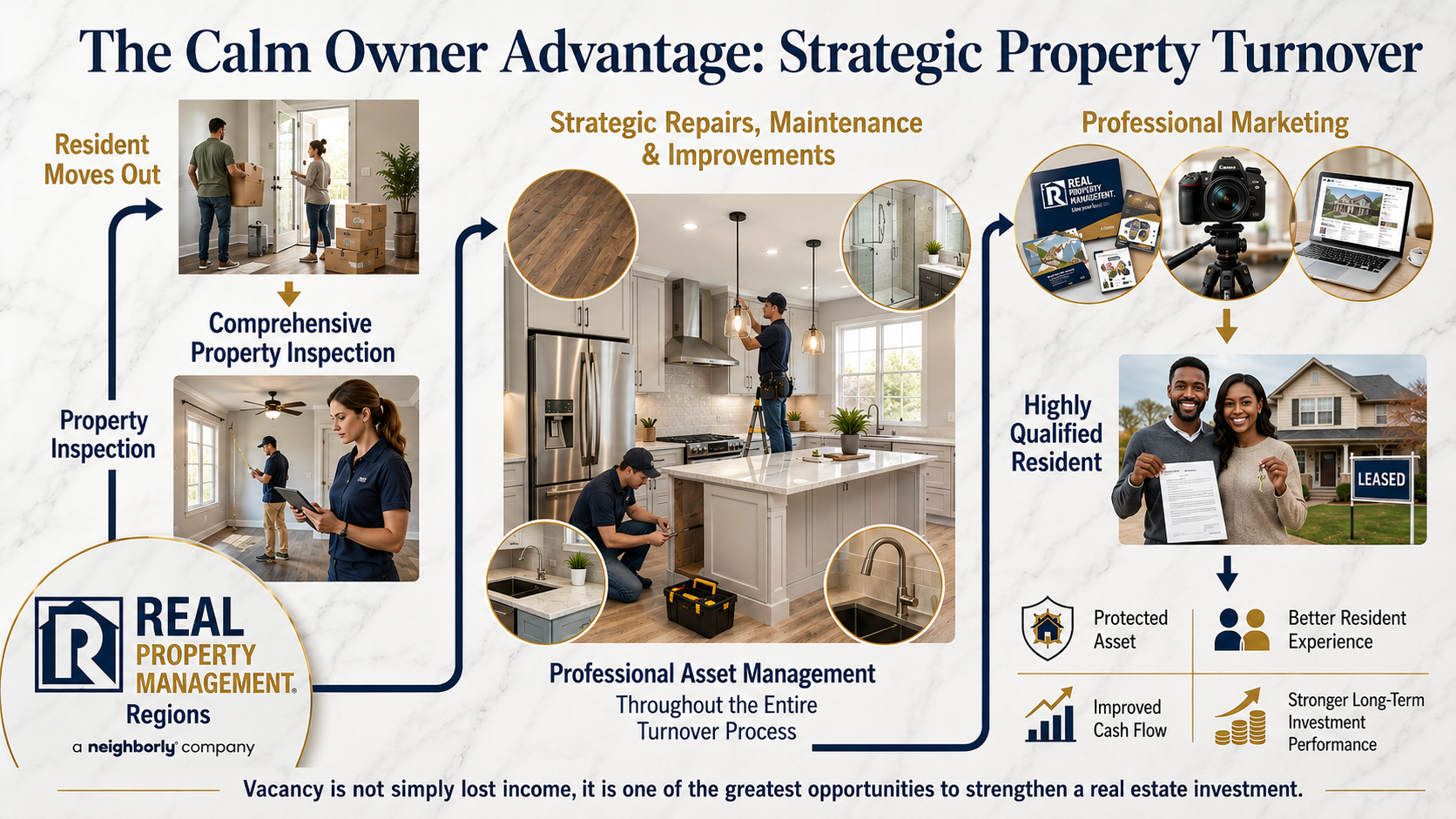
The biggest financial mistake I see during a turnover isn’t a few weeks of vacancy. It’s failing to use that vacancy to strengthen the investment before someone else depends on it. Owners naturally focus on reducing lost rent. However, the decisions made while a property sits empty often have a much greater impact on long-term performance than the vacancy itself. Before deciding what the next resident should pay, owners should first decide what kind of property they’re asking that resident to rent.
The True Value of Full Access
Last week, I wrote about preventive maintenance and why it should be viewed as an investment rather than simply another operating expense. A resident turnover is where that philosophy is tested. Once a home becomes vacant, owners regain something they rarely have during an active lease: complete access to the asset. Every room, every mechanical system, every crawlspace, every attic, and every exterior component can be evaluated without working around someone’s schedule or belongings. That brief window allows owners to stop reacting to maintenance requests one at a time and evaluate the property as a complete investment.
One pattern has repeated itself often enough that I no longer consider it coincidence. Owners who approve meaningful repairs, address deferred maintenance, and prepare the property before the next resident moves in almost never call six months later wishing they had invested more during the turnover. Those homes are more likely to attract highly qualified residents, experience fewer avoidable maintenance issues, and perform the way everyone hoped they would.
Owners who choose the opposite approach often make a very different phone call. It usually begins with a leak discovered after move-in, flooring that should have been replaced before furniture filled the rooms, an HVAC system that failed during the hottest week of July, or a repair that now has to be coordinated around a resident’s work schedule instead of an empty house. The money that appeared to be saved during turnover has a way of reappearing later through emergency service calls, additional contractor visits, frustrated residents, and disruptions that could have been prevented. That isn’t bad luck; it’s deferred maintenance presenting the invoice.
Regional Logistics and Contractor Scarcity
The realities of operating in our region only reinforce that lesson. Across the Virginia Northern Neck, the Middle Peninsula, Caroline County, and King George, skilled contractors often cover multiple counties. Miss the opportunity to schedule a trusted HVAC technician, plumber, or flooring contractor while the property is vacant, and the next available opening may not be next week. During the busiest parts of the leasing season, those same contractors may already be committed to waterfront renovations, larger commercial projects, or homes preparing for military relocations connected to Naval Support Facility Dahlgren. The delay doesn’t simply affect a repair schedule; it affects leasing, resident satisfaction, and ultimately the long-term performance of the investment.
I’ve stopped measuring the success of a turnover by how quickly a property returns to the market. I measure it by what happens after the lease is signed. If maintenance becomes predictable instead of reactive, if the resident enjoys a home that was genuinely prepared for them, and if the owner spends the next year reviewing investment performance instead of approving emergency invoices, then the turnover accomplished exactly what it was supposed to accomplish. The success wasn’t created by filling the vacancy quickly; it was created by using the vacancy wisely.
Investing in Long-Term Strategy
Every turnover is an opportunity to create long-term value rather than simply reduce the number of vacant days. That’s one of the defining differences between collecting rent and managing a real estate asset. A property’s long-term performance is rarely determined by what happened during a single month of vacancy; it’s determined by the decisions that were made while the owner still had complete control over the condition of the investment.
Real estate has a way of rewarding patience when patience is paired with sound judgment. A week invested in preparation can prevent months of unnecessary expense, operational disruption, and resident frustration. Owners rarely remember the extra days a property sat vacant, but they almost always remember the avoidable problems that followed when those days weren’t used well. After watching that pattern repeat itself for years, I’ve come to believe that vacancy isn’t the problem. Wasting it is.
About Stephen Guasp
Stephen Guasp is the co-owner of Real Property Management Regions, serving the Virginia Northern Neck, the Middle Peninsula, Caroline County, King George, and surrounding communities. Through The Calm Owner Advantage, he shares practical observations drawn from years of helping rental property owners move beyond day-to-day property management and think like long-term real estate asset managers.
Editorial Disclaimer
The Calm Owner Advantage is an editorial series published by Real Property Management Regions to encourage thoughtful conversations about rental property ownership, real estate asset management, and long-term investment strategy. The information presented is intended for educational purposes only and should not be considered legal, financial, tax, or investment advice. Every property and ownership situation is unique. Property owners should consult with qualified professionals regarding decisions specific to their circumstances.
This content is provided for general informational and educational purposes only and does not constitute financial, legal, tax, or investment advice. Readers should consult with licensed professionals regarding their specific circumstances.
We are pledged to the letter and spirit of U.S. policy for the achievement of equal housing opportunity throughout the Nation. See Equal Housing Opportunity Statement for more information.
